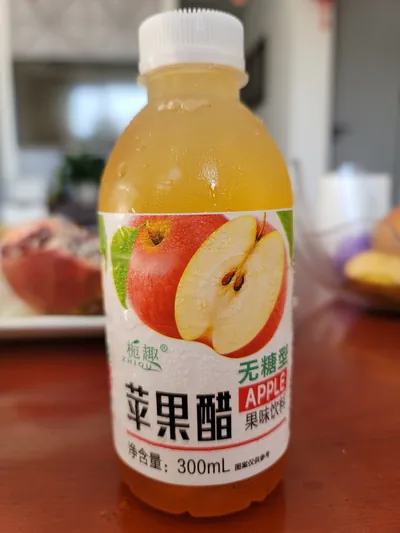
苹果醋果味饮料
300ml
| Item | per 100 g |
|---|---|
| Energy | Not provided |
| Protein | Not provided |
| Fat | Not provided |
| Carbohydrate | Not provided |
| of which sugars | Not provided |
| Sodium | Not provided |
| Caffeine | Not provided |
Where a value is missing, NRV% is not calculated and 0 is not substituted.
Ingredients
、(添加量2.0g/L)、 、、、、、、 、、、、、、(含苯丙氨酸)、、 、、、。
Sweetener
Detection is based only on the text provided and is not a full compositional analysis.
Ingredient guide
20/20 ingredients explainedFruit juice concentrate
Juice concentrated by evaporating most of the water from freshly squeezed fruit juice. It provides fruit flavour, colour and sweetness in drinks.
Sugar and caloriesContains natural sugars such as fructose, glucose and sucrose. The World Health Organization classifies sugars in fruit juice and fruit juice concentrate as “free sugars”; raises blood glucose.
Sodium cyclamate
A synthetic sweetener, sodium cyclamate is about 30–50 times as sweet as sucrose.
Sugar and caloriesNot a sugar, provides almost no calories and does not directly raise blood glucose.
Code: INS 952 / E952 Chinese Wikipedia: 甜蜜素
Acesulfame potassium
A synthetic intense sweetener, also called acesulfame K. About 200 times as sweet as sucrose, it is not metabolised by the body and is often combined with other sweeteners.
Sugar and caloriesNot a sugar, provides almost no calories and does not directly raise blood glucose.
Code: INS 950 / E950 Chinese Wikipedia: 乙酰磺胺酸钾
Aspartame
A dipeptide sweetener made from aspartic acid and phenylalanine, about 200 times as sweet as sucrose. It contains phenylalanine and must be avoided by people with phenylketonuria.
Sugar and caloriesContains no sugar. Calories are negligible because extremely small amounts are used; does not directly raise blood glucose. Contains phenylalanine (people with phenylketonuria must avoid it).
Code: INS 951 / E951 Chinese Wikipedia: 阿斯巴甜
Sucralose
An intense sweetener made by replacing some hydroxyl groups in sucrose with chlorine atoms. About 600 times as sweet as sucrose, it is barely metabolised by the body and replaces sugar for sweetness.
Sugar and caloriesNot a sugar, provides almost no calories and does not directly raise blood glucose.
Code: INS 955 / E955 Chinese Wikipedia: 三氯蔗糖
Citric acid
An organic acid present in citrus fruits, mostly produced industrially by fermentation. It adds sourness and adjusts pH in drinks.
Sugar and caloriesContains no sugar; used in very small amounts, with negligible calories.
Code: INS 330 / E330 Chinese Wikipedia: 檸檬酸
Glacial acetic acid
The main acidic component of vinegar; the high-purity form is called glacial acetic acid. It adds sourness and adjusts pH.
Sugar and caloriesContains no sugar; used in very small amounts, with negligible calories.
Code: INS 260 / E260 Chinese Wikipedia: 乙酸
DL-Malic acid
An organic acid naturally present in apples and other fruits, providing a mild, lasting sour taste.
Sugar and caloriesContains no sugar; used in very small amounts, with negligible calories.
Code: INS 296 / E296 Chinese Wikipedia: 苹果酸
Sodium citrate
The sodium salt of citric acid, used to buffer acidity in drinks and soften the sour taste.
Sugar and caloriesContains no sugar; contains sodium, and is used in very small amounts.
Code: INS 331 / E331 Chinese Wikipedia: 柠檬酸三钠
Sodium tripolyphosphate
A polyphosphate that binds metal ions and buffers acidity, helping stabilise drinks.
Sugar and caloriesContains no sugar; contains sodium, and is used in very small amounts.
Code: INS 451(i) / E451(i) Chinese Wikipedia: 三聚磷酸钠
Sodium hexametaphosphate
A polyphosphate that binds metal ions, stabilising drinks and preventing sediment.
Sugar and caloriesContains no sugar; contains sodium, and is used in very small amounts.
Code: INS 452(i) / E452(i) Chinese Wikipedia: 六偏磷酸钠
Disodium EDTA
A chelating agent that binds metal ions in drinks to prevent colour and flavour changes. It also stabilises drinks and supports preservation.
Sugar and caloriesContains no sugar; used in very small amounts.
Code: INS 386 / E386 Chinese Wikipedia: 乙二胺四乙酸
Sodium benzoate
The sodium salt of benzoic acid. It inhibits yeast and mould growth and preserves acidic drinks.
Sugar and caloriesContains no sugar; contains sodium, and is used in very small amounts.
Code: INS 211 / E211 Chinese Wikipedia: 苯甲酸钠
Caramel colour
A brown colouring made by heating sugars, sometimes with certain chemical processing aids. It colours drinks such as cola and tea drinks.
Sugar and caloriesUsed in very small amounts as a colouring, not as a source of sweetness.
Code: INS 150a–d / E150a–d Chinese Wikipedia: 焦糖色素
Tartrazine
A synthetic yellow azo colouring used to colour drinks.
Sugar and caloriesContains no sugar; used in very small amounts.
Code: INS 102 / E102 Chinese Wikipedia: 柠檬黄
Allura red
A synthetic red azo colouring used to colour drinks.
Sugar and caloriesContains no sugar; used in very small amounts.
Code: INS 129 / E129 Wikipedia: Allura Red AC
Flavourings
Substances that give drinks aroma and taste or enhance them. They may be naturally sourced or synthetic; specific formulations are usually not publicly disclosed.
Sugar and caloriesFlavourings are used in very small amounts and generally do not contribute sugar or calories.
Salt
Consists mainly of sodium chloride, used to season drinks or supply electrolytes, contributing sodium.
Sugar and caloriesContains no sugar; contains sodium.
Water
The main component of drinks. Mineral water comes from underground sources and contains natural minerals.
Sugar and caloriesContains no sugar and provides no calories.
Vinegar
An acidic seasoning liquid obtained by fermentation, mainly containing acetic acid, used to add sourness and flavour.
Sugar and caloriesContains almost no sugar.
Explanations are for reference and compiled from public information; the product label takes precedence. View the full ingredient dictionary
How this was determined
| Where sold | Mainland China |
|---|---|
| Brand basis | Brand field in source |
| Data completeness | 1/3 (ingredients, nutrition, sugar) |
| Sugar-free basis | Not confirmed sugar-free |
| Caffeine | Data missing (Data missing) |
| Sweeteners detected | Sucralose, Aspartame, Acesulfame K, Cyclamate |
| Sugars detected | Sucrose |
Nutrition may differ between sizes and recipes.
Data source
| Source | Open Food Facts |
|---|---|
| Note | Community-contributed and possibly incomplete; check the physical label. |
| Date accessed | 2026-11-16 |