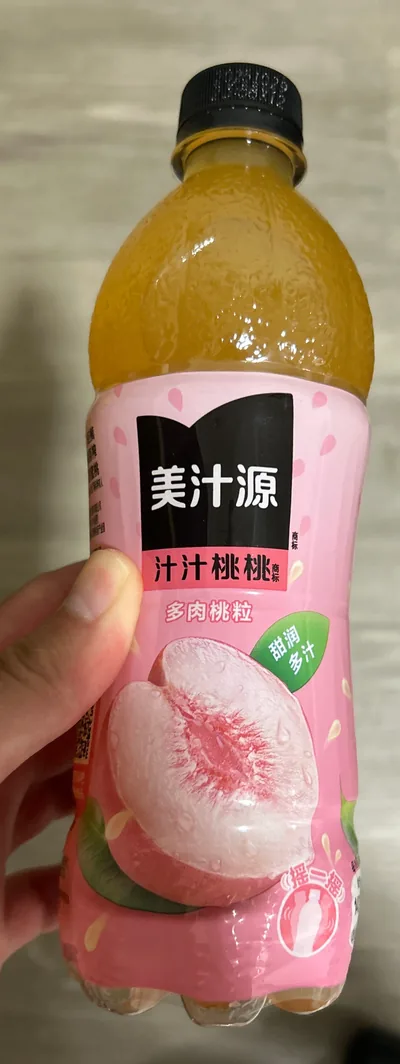
汁汁桃桃桃汁饮料
450 ml, MZY Peach Juice Drink
| Item | per 100 g | NRV% |
|---|---|---|
| Energy | 38 kcal (157 kJ) | 2% |
| Protein | 0.0 g | 0% |
| Fat | 0.0 g | 0% |
| Carbohydrate | 9.1 g | 3% |
| of which sugars | 8.0 g | |
| Sodium | 32 mg | 2% |
| Caffeine | Not provided |
Energy in kJ is converted from kcal at 1 kcal = 4.184 kJ. NRV% is calculated against the GB 28050 NRVs, only where the value is known.
Ingredients
, , , , , emulsifier (, ), acidity regulator (, ), antioxidant , sweetener , stabilizer , colour , .
SweetenerAdded sugar
Detection is based only on the text provided and is not a full compositional analysis.
Ingredient guide
14/14 ingredients explainedHigh-fructose corn syrup
A syrup made by hydrolysing starch into glucose, then converting some glucose into fructose. Its sweetness is close to sucrose, it dissolves easily, and it is commonly used in drinks.
Sugar and caloriesAdded sugar, about 4 kcal/g; raises blood glucose (mainly fructose and glucose).
Sugar
When an ingredient list says only “sugar”, it means edible sugar used for sweetness without specifying the type (commonly sucrose).
Sugar and caloriesAdded sugar, about 4 kcal/g; raises blood glucose.
Fruit juice concentrate
Juice concentrated by evaporating most of the water from freshly squeezed fruit juice. It provides fruit flavour, colour and sweetness in drinks.
Sugar and caloriesContains natural sugars such as fructose, glucose and sucrose. The World Health Organization classifies sugars in fruit juice and fruit juice concentrate as “free sugars”; raises blood glucose.
Steviol glycosides
Sweet components extracted from stevia leaves, about 200–300 times as sweet as sucrose. These plant-derived intense sweeteners may have a bitter aftertaste at high concentrations.
Sugar and caloriesNot a sugar, provides almost no calories and does not directly raise blood glucose.
Code: INS 960 / E960 Wikipedia: Steviol glycoside
Sodium carboxymethyl cellulose
A derivative obtained by carboxymethylating cellulose, used for thickening and stabilising. It makes drinks thicker and smoother and keeps particles more evenly suspended.
Sugar and caloriesContains no sugar, is barely digested or absorbed by the body, and is used in very small amounts.
Code: INS 466 / E466 Wikipedia: Carboxymethyl cellulose
Pectin
A polysaccharide present in fruits such as apples and citrus peel, used for thickening and stabilising. It also often stabilises proteins in acidic dairy drinks.
Sugar and caloriesContains no sugar, is barely digested or absorbed by the body, and is used in very small amounts (soluble dietary fibre).
Code: INS 440 / E440 Chinese Wikipedia: 果胶
Xanthan gum
A polysaccharide produced by fermenting starchy materials with Xanthomonas bacteria. Small amounts thicken drinks and suspend insoluble ingredients evenly.
Sugar and caloriesContains no sugar, is barely digested or absorbed by the body, and is used in very small amounts.
Code: INS 415 / E415 Chinese Wikipedia: 黄原胶
Citric acid
An organic acid present in citrus fruits, mostly produced industrially by fermentation. It adds sourness and adjusts pH in drinks.
Sugar and caloriesContains no sugar; used in very small amounts, with negligible calories.
Code: INS 330 / E330 Chinese Wikipedia: 檸檬酸
Sodium citrate
The sodium salt of citric acid, used to buffer acidity in drinks and soften the sour taste.
Sugar and caloriesContains no sugar; contains sodium, and is used in very small amounts.
Code: INS 331 / E331 Chinese Wikipedia: 柠檬酸三钠
Vitamin C / ascorbic acid
Vitamin C is both a nutrient and, because it oxidises readily, an antioxidant used to prevent drinks fading or developing off-flavours.
Sugar and caloriesContains no sugar; used in very small amounts.
Code: INS 300 / E300 Chinese Wikipedia: 维生素C
Lycopene
A carotenoid present in tomatoes and other red fruits and vegetables, used to colour drinks.
Sugar and caloriesContains no sugar; used in very small amounts.
Code: INS 160d / E160d Wikipedia: Lycopene
Flavourings
Substances that give drinks aroma and taste or enhance them. They may be naturally sourced or synthetic; specific formulations are usually not publicly disclosed.
Sugar and caloriesFlavourings are used in very small amounts and generally do not contribute sugar or calories.
Water
The main component of drinks. Mineral water comes from underground sources and contains natural minerals.
Sugar and caloriesContains no sugar and provides no calories.
Fruit purée
Fruit pulp made by removing the peel and stones or cores and crushing the fruit. It provides fruit flavour and a thick mouthfeel in drinks.
Sugar and caloriesContains sugars naturally present in fruit; check the nutrition information.
Explanations are for reference and compiled from public information; the product label takes precedence. View the full ingredient dictionary
How this was determined
| Where sold | Mainland China / Other |
|---|---|
| Brand basis | Brand field in source |
| Data completeness | 3/3 (ingredients, nutrition, sugar) |
| Sugar-free basis | Not confirmed sugar-free |
| Caffeine | Data missing (Data missing) |
| Sweeteners detected | Steviol glycosides |
| Sugars detected | None detected |
Nutrition may differ between sizes and recipes.
Data source
| Source | Open Food Facts |
|---|---|
| Note | Community-contributed and possibly incomplete; check the physical label. |
| Date accessed | 2026-11-16 |