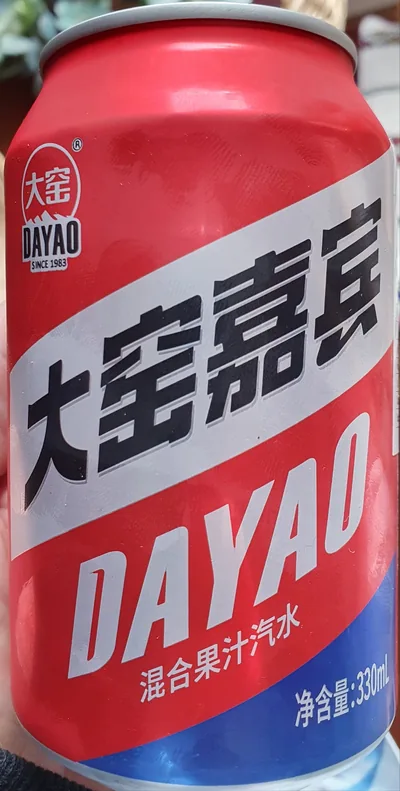
大窑嘉宾
330 ml, Dayao original
| Item | per 100 g | NRV% |
|---|---|---|
| Energy | 13 kcal (54 kJ) | 1% |
| Protein | 0.0 g | 0% |
| Fat | 0.0 g | 0% |
| Carbohydrate | 3.2 g | 1% |
| of which sugars | Not provided | |
| Sodium | 9 mg | 0% |
| Caffeine | Not provided |
Energy in kJ is converted from kcal at 1 kcal = 4.184 kJ. NRV% is calculated against the GB 28050 NRVs, only where the value is known.
Ingredients
, , , , , food additives (, , , , , , , )
SweetenerAdded sugar
Detection is based only on the text provided and is not a full compositional analysis.
Ingredient guide
13/13 ingredients explainedSugar
When an ingredient list says only “sugar”, it means edible sugar used for sweetness without specifying the type (commonly sucrose).
Sugar and caloriesAdded sugar, about 4 kcal/g; raises blood glucose.
Fruit juice concentrate
Juice concentrated by evaporating most of the water from freshly squeezed fruit juice. It provides fruit flavour, colour and sweetness in drinks.
Sugar and caloriesContains natural sugars such as fructose, glucose and sucrose. The World Health Organization classifies sugars in fruit juice and fruit juice concentrate as “free sugars”; raises blood glucose.
Fruit juice
Liquid pressed from fruit, used to provide fruit flavour in drinks.
Sugar and caloriesContains natural sugars such as fructose, glucose and sucrose. The World Health Organization classifies sugars in fruit juice as “free sugars”; raises blood glucose.
Honey
A natural sweet substance made by bees, consisting mainly of fructose and glucose. It provides sweetness and flavour in drinks.
Sugar and caloriesMainly fructose and glucose, about 3 kcal/g; raises blood glucose. The World Health Organization classifies the sugars in honey as “free sugars”.
Sodium cyclamate
A synthetic sweetener, sodium cyclamate is about 30–50 times as sweet as sucrose.
Sugar and caloriesNot a sugar, provides almost no calories and does not directly raise blood glucose.
Code: INS 952 / E952 Chinese Wikipedia: 甜蜜素
Acesulfame potassium
A synthetic intense sweetener, also called acesulfame K. About 200 times as sweet as sucrose, it is not metabolised by the body and is often combined with other sweeteners.
Sugar and caloriesNot a sugar, provides almost no calories and does not directly raise blood glucose.
Code: INS 950 / E950 Chinese Wikipedia: 乙酰磺胺酸钾
DL-Malic acid
An organic acid naturally present in apples and other fruits, providing a mild, lasting sour taste.
Sugar and caloriesContains no sugar; used in very small amounts, with negligible calories.
Code: INS 296 / E296 Chinese Wikipedia: 苹果酸
Citric acid
An organic acid present in citrus fruits, mostly produced industrially by fermentation. It adds sourness and adjusts pH in drinks.
Sugar and caloriesContains no sugar; used in very small amounts, with negligible calories.
Code: INS 330 / E330 Chinese Wikipedia: 檸檬酸
Potassium sorbate
The potassium salt of sorbic acid. It inhibits mould and yeast and preserves drinks.
Sugar and caloriesContains no sugar; contains potassium, and is used in very small amounts.
Code: INS 202 / E202 Chinese Wikipedia: 山梨酸钾
Benzoic acid
An organic acid naturally present in some berries. It inhibits yeast and mould growth and preserves acidic drinks.
Sugar and caloriesContains no sugar; used in very small amounts, with negligible calories.
Code: INS 210 / E210 Chinese Wikipedia: 苯甲酸
Caramel colour
A brown colouring made by heating sugars, sometimes with certain chemical processing aids. It colours drinks such as cola and tea drinks.
Sugar and caloriesUsed in very small amounts as a colouring, not as a source of sweetness.
Code: INS 150a–d / E150a–d Chinese Wikipedia: 焦糖色素
Carbon dioxide
Dissolves in water to form carbonic acid, giving drinks bubbles and a tingling mouthfeel. It can also slightly increase acidity.
Sugar and caloriesContains no sugar and provides no calories.
Code: INS 290 / E290 Chinese Wikipedia: 二氧化碳
Water
The main component of drinks. Mineral water comes from underground sources and contains natural minerals.
Sugar and caloriesContains no sugar and provides no calories.
Explanations are for reference and compiled from public information; the product label takes precedence. View the full ingredient dictionary
How this was determined
| Where sold | Mainland China / Other |
|---|---|
| Brand basis | Brand field in source |
| Data completeness | 2/3 (ingredients, nutrition, sugar) |
| Sugar-free basis | Not confirmed sugar-free |
| Caffeine | Data missing (Data missing) |
| Sweeteners detected | Acesulfame K, Cyclamate |
| Sugars detected | None detected |
Nutrition may differ between sizes and recipes.
Data source
| Source | Open Food Facts |
|---|---|
| Note | Community-contributed and possibly incomplete; check the physical label. |
| Date accessed | 2026-11-16 |