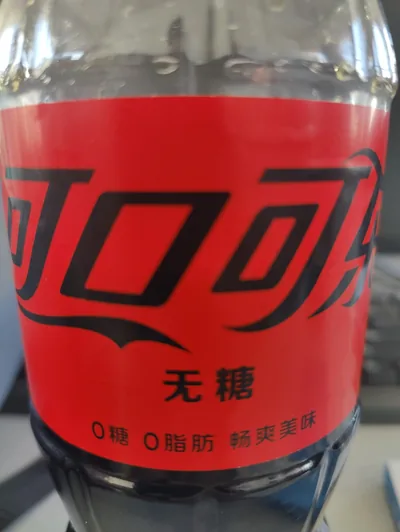
可口可乐零度
888ml
| Item | per 100 g | NRV% |
|---|---|---|
| Energy | 0 kcal (0 kJ) | 0% |
| Protein | 0.0 g | 0% |
| Fat | 0.0 g | 0% |
| Carbohydrate | 0.0 g | 0% |
| of which sugars | 0.0 g | |
| Sodium | 18 mg | 1% |
| Caffeine | Not provided |
Energy in kJ is converted from kcal at 1 kcal = 4.184 kJ. NRV% is calculated against the GB 28050 NRVs, only where the value is known.
Ingredients
Original label (Chinese)
、食品添加剂(、、、、(含苯丙氨酸)、、、、)、
Sweetener
Detection is based only on the text provided and is not a full compositional analysis.
Ingredient guide
11/11 ingredients explainedAspartame
Sweetens in place of sugar in tiny amounts. People with phenylketonuria (PKU) must avoid it.
Sugar and caloriesNo sugar; calories are negligible at the amounts used and it does not directly raise blood sugar.
More (code and source)
Code: INS 951 / E951 Chinese Wikipedia: 阿斯巴甜
Acesulfame potassium
Sweetens in place of sugar, often alongside other sugar substitutes.
Sugar and caloriesNot sugar; almost no calories and does not directly raise blood sugar.
More (code and source)
Code: INS 950 / E950 Chinese Wikipedia: 乙酰磺胺酸钾
Sucralose
Replaces sugar for sweetness; a tiny amount goes a long way.
Sugar and caloriesNot sugar; almost no calories and does not directly raise blood sugar.
More (code and source)
Code: INS 955 / E955 Chinese Wikipedia: 三氯蔗糖
Phosphoric acid
Gives drinks such as cola a sharp sour taste.
Sugar and caloriesNo sugar; used in small amounts.
More (code and source)
Code: INS 338 / E338 Chinese Wikipedia: 磷酸
Sodium citrate
Softens sourness and helps keep the taste consistent.
Sugar and caloriesNo sugar; contains sodium and is used in small amounts.
More (code and source)
Code: INS 331 / E331 Chinese Wikipedia: 柠檬酸三钠
Sodium benzoate
Helps acidic drinks resist mold and spoilage.
Sugar and caloriesNo sugar; contains sodium and is used in small amounts.
More (code and source)
Code: INS 211 / E211 Chinese Wikipedia: 苯甲酸钠
Caramel colour
Adds brown colour; made by heating sugar and used for colouring rather than sweetness.
Sugar and caloriesNot used for sweetness; calories are negligible at the amounts used.
More (code and source)
Code: INS 150a–d / E150a–d Chinese Wikipedia: 焦糖色素
Flavourings
Adds or boosts flavour; it may come from ingredients such as plants or be manufactured.
Sugar and caloriesUsed in tiny amounts; sugar and calories are usually negligible.
More (code and source)
Carbon dioxide
Adds bubbles, a little sourness and a fizzy feel.
Sugar and caloriesNo sugar or calories.
More (code and source)
Code: INS 290 / E290 Chinese Wikipedia: 二氧化碳
Caffeine
Helps you feel more alert and adds bitterness. Pregnant people, children and those sensitive to caffeine should limit it.
Sugar and caloriesNo sugar or calories.
More (code and source)
Water
Forms the base of drinks and mixes the other ingredients together. Mineral water also contains natural minerals.
Sugar and caloriesNo sugar or calories.
More (code and source)
Explanations are for reference and compiled from public information; the product label takes precedence. View the full ingredient dictionary
How this was determined
| Where sold | Mainland China |
|---|---|
| Brand basis | Brand field in source |
| Data completeness | 3/3 (ingredients, nutrition, sugar) |
| Sugar-free basis | Nutrition table: sugars = 0 |
| Caffeine | Contains caffeine (Inferred from ingredients) |
| Sweeteners detected | Aspartame, Acesulfame K |
| Sugars detected | Sucrose |
Nutrition may differ between sizes and recipes.
Data source
| Source | Open Food Facts |
|---|---|
| Note | Community-contributed and possibly incomplete; check the physical label. |
| Date accessed | 2026-11-16 |