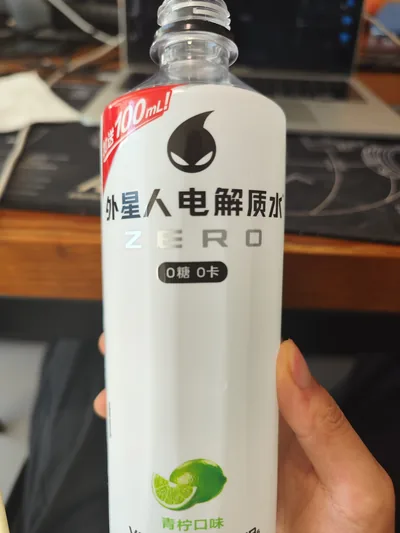
外星人电解质水 青柠口味
Size not provided
| Item | per 100 g | NRV% |
|---|---|---|
| Energy | 0 kcal (0 kJ) | 0% |
| Protein | 0.0 g | 0% |
| Fat | 0.0 g | 0% |
| Carbohydrate | 2.0 g | 1% |
| of which sugars | 0.0 g | |
| Sodium | 0 mg | 0% |
| Caffeine | Not provided |
Energy in kJ is converted from kcal at 1 kcal = 4.184 kJ. NRV% is calculated against the GB 28050 NRVs, only where the value is known.
Ingredients
、、、()、、、、、、、、、、
Sweetener
Detection is based only on the text provided and is not a full compositional analysis.
Ingredient guide
14/14 ingredients explainedFruit juice concentrate
Juice concentrated by evaporating most of the water from freshly squeezed fruit juice. It provides fruit flavour, colour and sweetness in drinks.
Sugar and caloriesContains natural sugars such as fructose, glucose and sucrose. The World Health Organization classifies sugars in fruit juice and fruit juice concentrate as “free sugars”; raises blood glucose.
Erythritol
A sugar alcohol naturally present in some fruits and fermented foods, produced industrially by fermentation. About 60–70% as sweet as sucrose, it is often combined with intense sweeteners.
Sugar and caloriesAbout 0–0.2 kcal/g; does not raise blood glucose. Too much at once may cause gastrointestinal discomfort such as bloating and diarrhoea.
Code: INS 968 / E968 Chinese Wikipedia: 赤藓醇
Sucralose
An intense sweetener made by replacing some hydroxyl groups in sucrose with chlorine atoms. About 600 times as sweet as sucrose, it is barely metabolised by the body and replaces sugar for sweetness.
Sugar and caloriesNot a sugar, provides almost no calories and does not directly raise blood glucose.
Code: INS 955 / E955 Chinese Wikipedia: 三氯蔗糖
Potassium lactate
The potassium salt of lactic acid, used to regulate acidity and supply potassium ions, commonly found in electrolyte drinks.
Sugar and caloriesContains no sugar; contains potassium, and is used in very small amounts.
Code: INS 326 / E326 Wikipedia: Potassium lactate
Citric acid
An organic acid present in citrus fruits, mostly produced industrially by fermentation. It adds sourness and adjusts pH in drinks.
Sugar and caloriesContains no sugar; used in very small amounts, with negligible calories.
Code: INS 330 / E330 Chinese Wikipedia: 檸檬酸
DL-Malic acid
An organic acid naturally present in apples and other fruits, providing a mild, lasting sour taste.
Sugar and caloriesContains no sugar; used in very small amounts, with negligible calories.
Code: INS 296 / E296 Chinese Wikipedia: 苹果酸
Sodium bicarbonate
Commonly called baking soda, it neutralises sourness and adjusts pH in drinks. It can also release carbon dioxide on contact with acid.
Sugar and caloriesContains no sugar; contains sodium and is one source of sodium in drinks.
Code: INS 500(ii) / E500(ii) Chinese Wikipedia: 碳酸氢钠
Vitamin E / tocopherols
Vitamin E substances serve as both nutrients and fat-soluble antioxidants, preventing fats from oxidising and developing off-flavours.
Sugar and caloriesContains no sugar; used in very small amounts.
Code: INS 306 / 307a / 307b / 307c / E306–E309 Chinese Wikipedia: 维生素E
Flavourings
Substances that give drinks aroma and taste or enhance them. They may be naturally sourced or synthetic; specific formulations are usually not publicly disclosed.
Sugar and caloriesFlavourings are used in very small amounts and generally do not contribute sugar or calories.
Vitamin B6
A water-soluble vitamin involved in protein metabolism, used for nutritional fortification.
Sugar and caloriesContains no sugar; used in very small amounts.
Potassium chloride
A chloride salt of potassium, often used to supply potassium in electrolyte drinks. It can also partly replace table salt for seasoning.
Sugar and caloriesContains no sugar; contains potassium, and is used in very small amounts.
Code: INS 508 / E508 Chinese Wikipedia: 氯化钾
Zinc gluconate
The zinc salt of gluconic acid, used to supply the trace element zinc.
Sugar and caloriesContains no sugar; used in very small amounts.
Salt
Consists mainly of sodium chloride, used to season drinks or supply electrolytes, contributing sodium.
Sugar and caloriesContains no sugar; contains sodium.
Water
The main component of drinks. Mineral water comes from underground sources and contains natural minerals.
Sugar and caloriesContains no sugar and provides no calories.
Explanations are for reference and compiled from public information; the product label takes precedence. View the full ingredient dictionary
How this was determined
| Where sold | Mainland China |
|---|---|
| Brand basis | Brand field in source |
| Data completeness | 3/3 (ingredients, nutrition, sugar) |
| Sugar-free basis | Nutrition table: sugars = 0 |
| Caffeine | Data missing (Data missing) |
| Sweeteners detected | Sucralose, Erythritol |
| Sugars detected | Sucrose |
Nutrition may differ between sizes and recipes.
Data source
| Source | Open Food Facts |
|---|---|
| Note | Community-contributed and possibly incomplete; check the physical label. |
| Date accessed | 2026-11-16 |