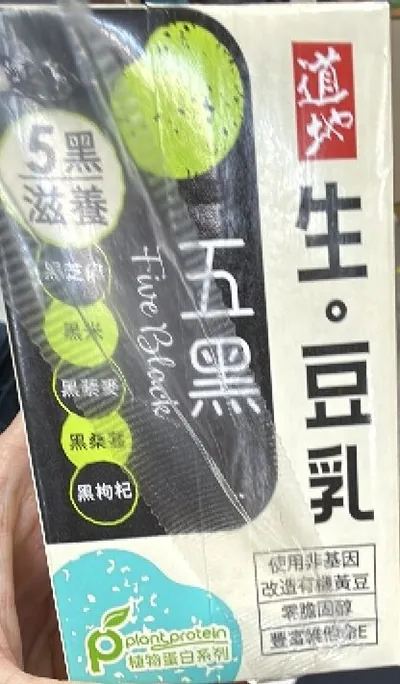
五黑生豆乳
Size not provided
| Item | per 100 g | NRV% |
|---|---|---|
| Energy | 48 kcal (201 kJ) | 2% |
| Protein | 1.0 g | 2% |
| Fat | 1.7 g | 3% |
| Carbohydrate | 7.0 g | 2% |
| of which sugars | 6.8 g | |
| Sodium | 20 mg | 1% |
| Caffeine | Not provided |
Energy in kJ is converted from kcal at 1 kcal = 4.184 kJ. NRV% is calculated against the GB 28050 NRVs, only where the value is known.
Ingredients
, , , , , , , , Emulsifier (, , , (Enzymatic), ), Antioxidant (, ), Acidity Regulator (, ),
Added sugar
Detection is based only on the text provided and is not a full compositional analysis.
Ingredient guide
18/18 ingredients explainedSugar
When an ingredient list says only “sugar”, it means edible sugar used for sweetness without specifying the type (commonly sucrose).
Sugar and caloriesAdded sugar, about 4 kcal/g; raises blood glucose.
Sucrose esters of fatty acids
Emulsifiers made by reacting sucrose with fatty acids, used to keep protein drinks, plant milks and similar products uniform and stable. They are emulsifiers, rather than sucrose itself.
Sugar and caloriesNot a sugar used to add sweetness; used in very small amounts.
Code: INS 473 / E473 Wikipedia: Sucrose esters
Soy lecithin / lecithin
A mixture containing phospholipids, often extracted from soybeans or sunflower seeds. This naturally sourced emulsifier mixes fats evenly with water. People with soy allergies should take care when it is made from soybeans.
Sugar and caloriesContains no sugar; used in very small amounts.
Code: INS 322 / E322 Chinese Wikipedia: 卵磷脂
Succinylated monoglycerides
Emulsifiers made by reacting monoglycerides with succinic acid, used to stabilise emulsions.
Sugar and caloriesContains no sugar; used in very small amounts.
Code: INS 472g / E472g Wikipedia: Mono- and diglycerides of fatty acids
Microcrystalline cellulose
Tiny particles obtained by partially hydrolysing cellulose. Used as a stabiliser in drinks, it evenly suspends insoluble particles such as calcium salts in plant milks.
Sugar and caloriesContains no sugar, is barely digested or absorbed by the body, and is used in very small amounts.
Code: INS 460(i) / E460(i) Wikipedia: Microcrystalline cellulose
Sodium carboxymethyl cellulose
A derivative obtained by carboxymethylating cellulose, used for thickening and stabilising. It makes drinks thicker and smoother and keeps particles more evenly suspended.
Sugar and caloriesContains no sugar, is barely digested or absorbed by the body, and is used in very small amounts.
Code: INS 466 / E466 Wikipedia: Carboxymethyl cellulose
Sodium carbonate
Commonly called soda ash, it neutralises sourness and adjusts pH in drinks.
Sugar and caloriesContains no sugar; contains sodium, and is used in very small amounts.
Code: INS 500(i) / E500(i) Chinese Wikipedia: 碳酸钠
Sodium citrate
The sodium salt of citric acid, used to buffer acidity in drinks and soften the sour taste.
Sugar and caloriesContains no sugar; contains sodium, and is used in very small amounts.
Code: INS 331 / E331 Chinese Wikipedia: 柠檬酸三钠
Sodium D-erythorbate
The sodium salt of a stereoisomer of ascorbic acid. A strong antioxidant, it prevents oxidation-related colour changes in drinks but does not have the nutritional function of vitamin C.
Sugar and caloriesContains no sugar; contains sodium, and is used in very small amounts.
Code: INS 316 / E316 Chinese Wikipedia: 异抗坏血酸
Vitamin E / tocopherols
Vitamin E substances serve as both nutrients and fat-soluble antioxidants, preventing fats from oxidising and developing off-flavours.
Sugar and caloriesContains no sugar; used in very small amounts.
Code: INS 306 / 307a / 307b / 307c / E306–E309 Chinese Wikipedia: 维生素E
Salt
Consists mainly of sodium chloride, used to season drinks or supply electrolytes, contributing sodium.
Sugar and caloriesContains no sugar; contains sodium.
Water
The main component of drinks. Mineral water comes from underground sources and contains natural minerals.
Sugar and caloriesContains no sugar and provides no calories.
Sesame
Sesame seeds contain fat and protein and provide aroma. People with sesame allergies should take care.
Sugar and caloriesContains small amounts of natural sugars; mostly fat and protein.
Soybeans
An ingredient for soy milk and plant-protein drinks, rich in protein. People with soy allergies should take care.
Sugar and caloriesContains small amounts of natural sugars, rather than additionally added sugar.
Rice
Rice and its coloured varieties (red rice and black rice), often used in mixed-grain drinks.
Sugar and caloriesNot added sugar; contains small amounts of natural sugars or starch. Check the nutrition information.
Quinoa
A grain-like seed often used in mixed-grain drinks.
Sugar and caloriesNot added sugar; contains small amounts of natural sugars or starch. Check the nutrition information.
Mulberries
The fruits of mulberry trees, with natural sweetness, used in fruit-flavoured drinks.
Sugar and caloriesContains natural sugars; check the nutrition information.
Goji berries
The dried red (or black) fruits of goji, often used in Chinese drinks with a mild sweetness.
Sugar and caloriesContains natural sugars; check the nutrition information.
Explanations are for reference and compiled from public information; the product label takes precedence. View the full ingredient dictionary
How this was determined
| Where sold | Hong Kong |
|---|---|
| Brand basis | Brand field in source |
| Data completeness | 3/3 (ingredients, nutrition, sugar) |
| Sugar-free basis | Not confirmed sugar-free |
| Caffeine | Data missing (Data missing) |
| Sweeteners detected | None detected |
| Sugars detected | None detected |
Nutrition may differ between sizes and recipes.
Data source
| Source | Open Food Facts |
|---|---|
| Note | Community-contributed and possibly incomplete; check the physical label. |
| Date accessed | 2026-11-16 |